Sift
An AI-integrated open source platform for seamless search and collaboration with forest restoration practitioners.
2x
Reducing the document and research paper review time
3000
Research papers have been currently trained for the LLM
Overview
Consisting of 2,400 members, including volunteers, scientists, engineers, Collaborative Earth is a non-profit organization which operate in various ecological regeneration labs to create pathways for social and ecological regeneration.
Team
Product Designers, Organization Lead, Data Scientists and Mentors
Company
Collaborative Earth
Focus
0-1 - UX Design - Product Strategy - Design Systems
Role
I designed a 0–1 web platform, conducting research and usability testing with participants across the globe, synthesizing insights, defining user flows and interactions. Created a design system to maintain a cohesive visual language.
problem
Forest regeneration practitioners struggle with sparse, scattered information
We received a brief from Collaborative Earth with the mission to review and synthesize data due to the abundance of unpublished research, documents, and case studies, some of which are in non-English formats.
Evidence from the team
overview of the solution
AI-integrated open-source platform for forest restorations, enabling quicker review of research papers.
The project resulted in an open-source repository that uses artificial intelligence to enhance planning and collaboration by providing insights, community knowledge, resources, and mapping tools.
how we approached
Smart search engine
Searching for case studies and publications based on the location in the implementation stage provides valuable and accessible resources.
AI-integrated resource review
Users can upload resources to quickly generate and analyze insights by leveraging AI, enabling more efficient paper reviews.
Annotate & collaborate
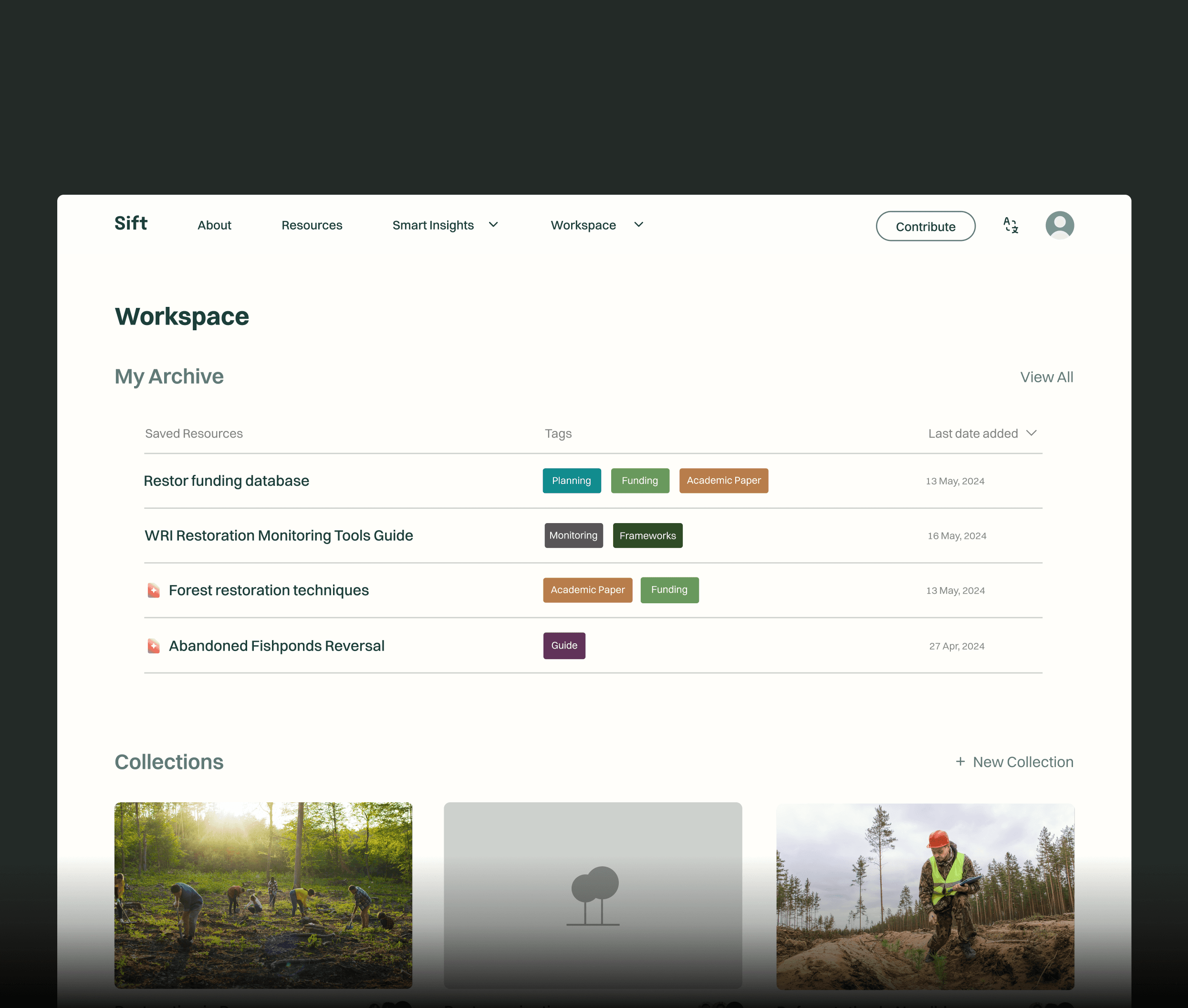
Practitioners can save resources in the workspace, collaborate with team members, and have discussions all in one place.
solution sneak peek

Customize Tags
Practitioners can create their personal space, using customized tags as organizers for clear tagging and labeling when saving resources.
Smart Insights
Smart insights are generated through LLMs analyzing thousands of vetted resources, the tool produces concise summaries, making it easier for practitioners to review the material quickly.

Collaboration
The collections enable collaboration among team members and organizations, where they ca track the types of resources saved, the number of files stored, and the count of participating members.
Multi Search Engine
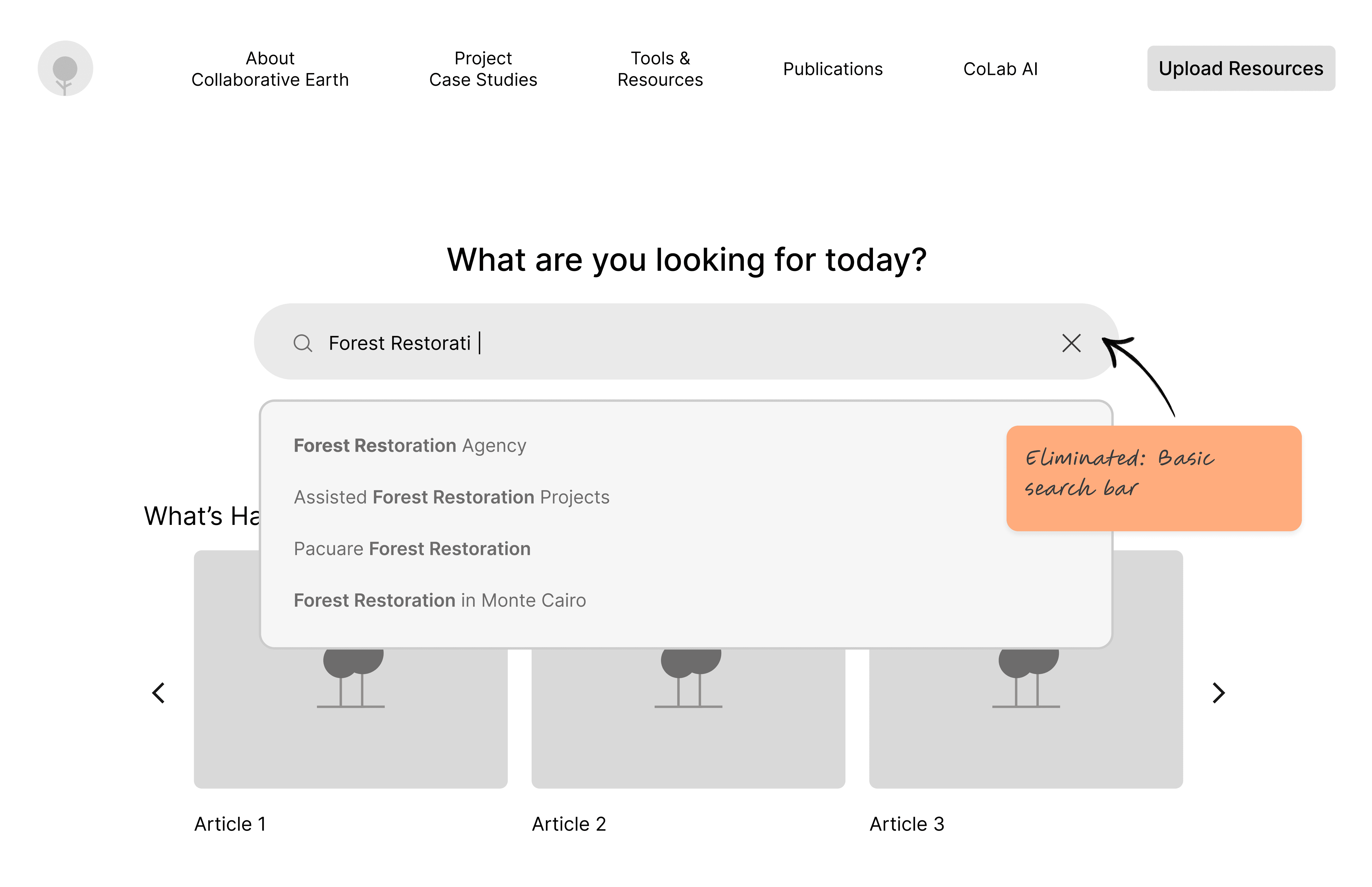
Implementation of a dual search function, giving users to both search and quickly extract insights by uploading research papers or policy documents. AI-powered search is an advanced search bar helps them to find relevant and well-cited sources
What could we made better, what was missing?
We conducted primary research on the contents of gray literature, exploring their current data usage and methods, and distilled our findings as follows.
Overlooked metrics on tools and community
Practitioners tend to look for certain tools and resources. Metrics like income and well-being of local communities are often overlooked, but crucial for project success.

Lack of universal tool
There is a lack of one universal tool that aggregates key features for restoration practitioners.
Challenges in literature scanning and documentation
It is challenging for practitioners to efficiently scan literature in short period of time.
validation and post testing
From the research, 3-4 design directions emerged, each targeting a gap practitioners faced in their daily workflow
The search bar was designed for all-in-one functionality
Constraint — Stakeholders preferred a transparent version with essential functions and AI integration for better search refinement.
solution
USE CASE #1
Easily search documents and summaries
Searching for case studies, papers and publications by location or implementation stage can be a valuable recource.
USE CASE #2
Save, share resources and collaborate with teams
Practitioners can easily collaborate, save resources in their personal archive foldrer or share it across the team to communicate their ideas effectively.
USE CASE #3
Upload documents for insights
AI-powered insghts help practitioners use search engines to find relevant facts and figures. Based on the uploaded document, they can access a variety of content, case studies, research papers and local knowledge.